Carpenter ant damage differs fundamentally from subterranean termite activity because carpenter ants do not ingest cellulose; they carve out clean, smooth galleries inside damp lumber to rear brood. In Houston,…
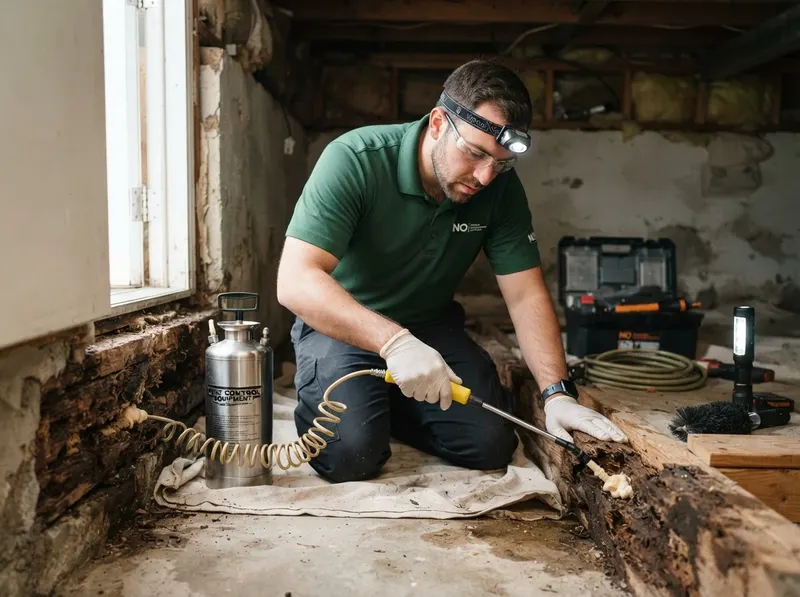
Carpenter ant damage differs fundamentally from subterranean termite activity because carpenter ants do not ingest cellulose; they carve out clean, smooth galleries inside damp lumber to rear brood. In Houston, persistent relative humidity above 75% accelerates roof leaks, plumbing condensation, and window seal failure, producing the softened pine and cedar framing these colonies require. When worker ants establish an indoor satellite nest, they often connect to an outdoor parent colony located in a dying oak tree within 100 yards of the home. Surface aerosol sprays from retail stores disperse foraging workers across wall voids without penetrating the central brood chamber, frequently compounding the infestation. Structural remediation relies on non-repellent transfer chemistry and micro-dusts applied straight into wall framing, allowing active foragers to track the compound back to the reproductive queen.
Properties in heavily canopied neighborhoods such as Kingwood, Memorial, and River Oaks encounter carpenter ant pressure from dense overhanging tree branches contacting roof eaves. In historic pier-and-beam properties across The Heights and Montrose, plumbing runs under damp subflooring create primary nesting sites. The decision to choose targeted wall void remediation over generic surface spraying hinges on nesting depth. If coarse, sawdust-like frass containing insect parts falls from baseboards or window headers, satellite colonies are already established within structural studs. The operational trade-off of void remediation involves drilling discrete 1/8-inch access holes directly into drywall or fascia boards to deliver dry flowable materials into the gallery, which prevents broader wood destruction without requiring immediate framing demolition.
Coastal moisture and low-lying drainage conditions in Clear Lake and Meyerland present unique challenges following severe rain events and bayou cresting. Saturated wall plates along concrete slabs create ideal nesting conditions for Camponotus modoc and Camponotus pennsylvanicus. A comprehensive remediation protocol follows a concrete three-step sequence. First, technicians map structural moisture anomalies exceeding 18% wood moisture content using pinless meters along interior exterior walls. Second, pressurized dust formulation is applied into targeted timber voids to achieve mechanical kill of the satellite queens and brood. Third, exterior botanical perimeter bands are placed around the foundation, and overhanging limbs within 6 feet of the roofline are marked for clearing to sever natural foraging highways.
Every job gets a firm, written price after a free on-site visit.
Tell us about your carpenter ant structural remediation job in Houston and we'll send a clear, written quote, usually the same day.
 (346) 776-1611