Gulf Coast mosquito pressure accelerates rapidly due to annual rainfall exceeding 49 inches and relative humidity averaging above 75 percent. In established neighborhoods like The Heights, Montrose, and River Oaks,…
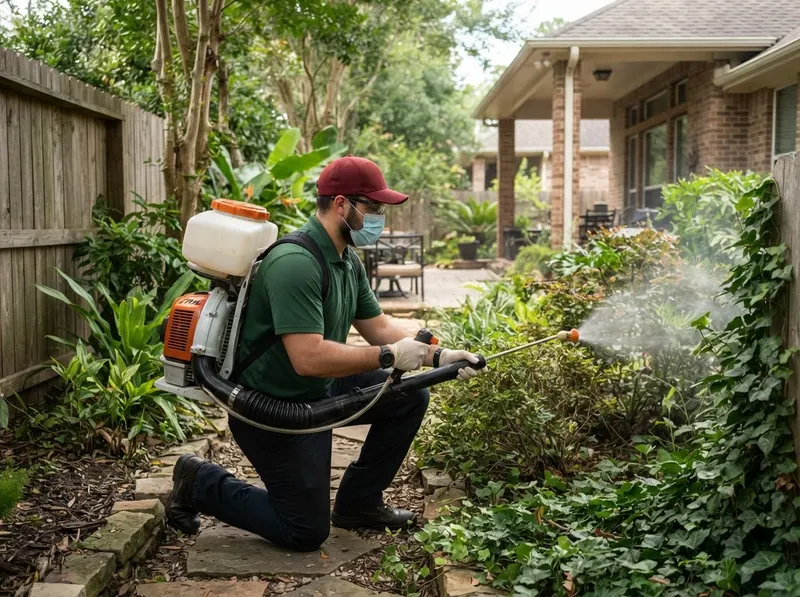
Gulf Coast mosquito pressure accelerates rapidly due to annual rainfall exceeding 49 inches and relative humidity averaging above 75 percent. In established neighborhoods like The Heights, Montrose, and River Oaks, dense oak canopies, broadleaf tropical landscaping, and shaded brick courtyards create sheltered resting harbors for daytime-biting Asian tiger mosquitoes. In Memorial and Meyerland, proximity to slow-draining bayou corridors like Buffalo Bayou and Brays Bayou allows water pooling that accelerates the Culex mosquito lifecycle from egg to biting adult in as few as 7 days. Rather than blanketing an entire lawn with broad-spectrum toxins, targeted barrier defense directs low-toxicity, micro-encapsulated EPA-reduced risk formulations specifically to the shaded underside of plant leaves where mosquitoes rest during the daylight hours, minimizing drift and preserving non-target pollinators.
Selecting targeted barrier defense fits homeowners seeking active relief in heavily vegetated backyards, whereas automated misting systems suit large estates but require permanent perimeter tubing and frequent tank refills. In sprawling wooded landscapes across Kingwood or Oak Forest, applying residual micro-droplets directly to bamboo groves, ivy beds, and perimeter fence lines forms a vertical barrier that intercepts migrating swarms before they reach patios or outdoor kitchens. For bayfront and waterfront properties in Clear Lake, technicians combine vertical foliage treatments with bacterial larvicide tablets (Bacillus thuringiensis israelensis) inside drainage basins, French drain cleanouts, and catch basins. This stops aquatic mosquito larvae from emerging into adults without harming aquatic wildlife or non-target insects.
Property layout and drainage dynamics dictate exact perimeter strategies across diverse Harris County soils. Slow-percolating gumbo clay in West University Place and Meyerland often holds puddles in lawn depressions 48 to 72 hours after heavy Gulf downpours. The operational protocol involves three sequence steps: first, physical inspection of drainage lines, plant saucers, and low-lying perimeter beds; second, direct treatment of standing water reservoirs using mineral oil barriers or biological larvicide rings; third, high-pressure mist application to perimeter foliage up to a height of 10 feet. Technicians verify perimeter property lines, identify outdoor fish ponds or vegetable gardens to establish a 10-foot untreated protective buffer, and confirm that all botanical surfaces are dry to the touch before children and household pets return to the yard.
Every job gets a firm, written price after a free on-site visit.
Tell us about your targeted mosquito barrier defense job in Houston and we'll send a clear, written quote, usually the same day.
 (346) 776-1611